Coca-Cola FEMSA
8,200 operators train 36 hours a year on APEX simulators, replaying the real accidents from their operation: 52% fewer minor accidents.
Read the full story−0%fewer accidents0operators0hours per year

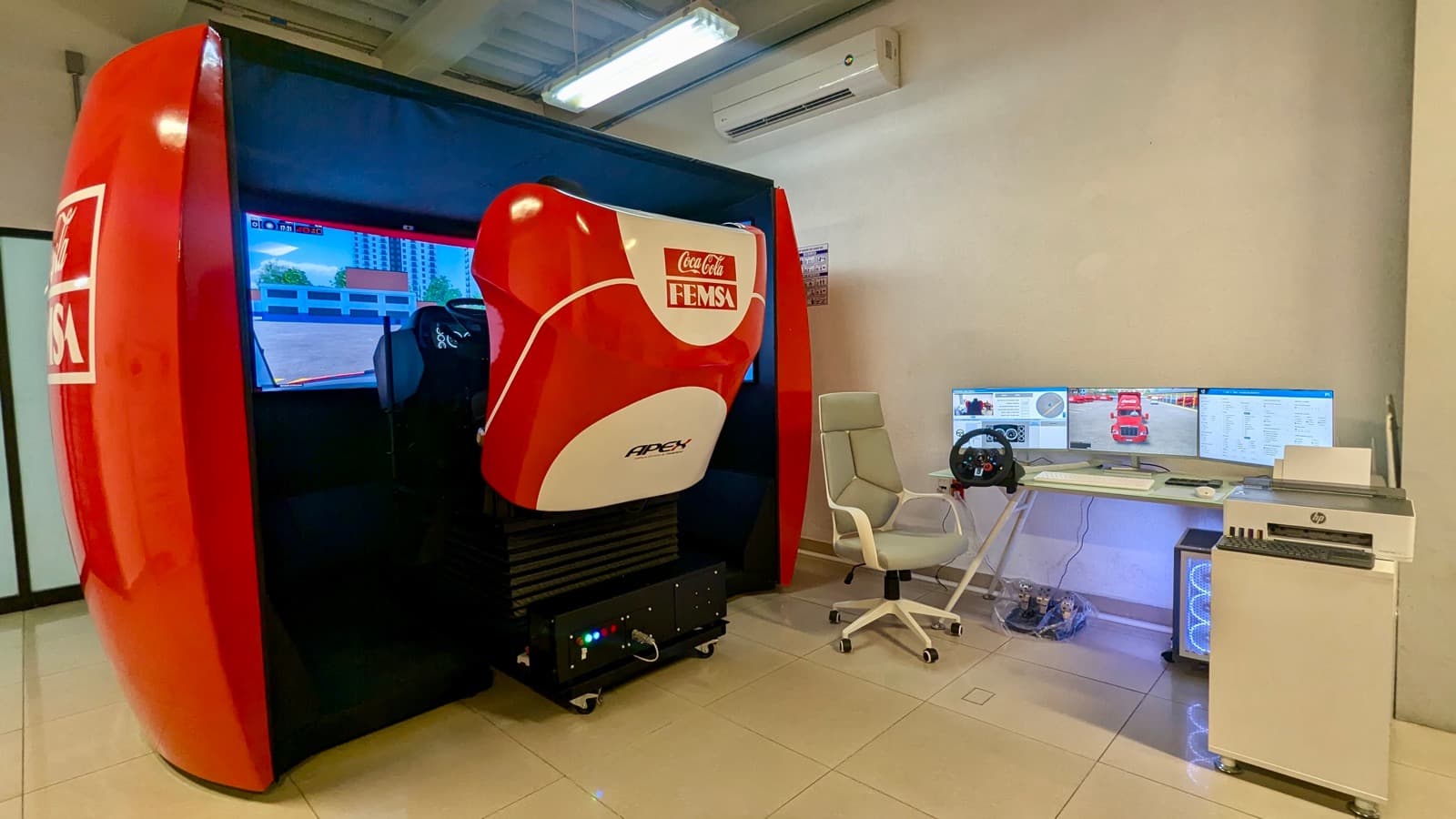
Train and certify heavy-duty truck operators on the real accidents and risk conditions of your own operation.
Request a quoteThe APEX truck driving simulator is a professional training system for fleets: a real tractor-trailer cab, immersive wraparound projection, and software that measures every maneuver the operator makes.
It is the tool private fleets, federal motor carriers, and government agencies use to train, evaluate, and recertify their heavy-duty truck operators without putting vehicles, cargo, or people at risk.
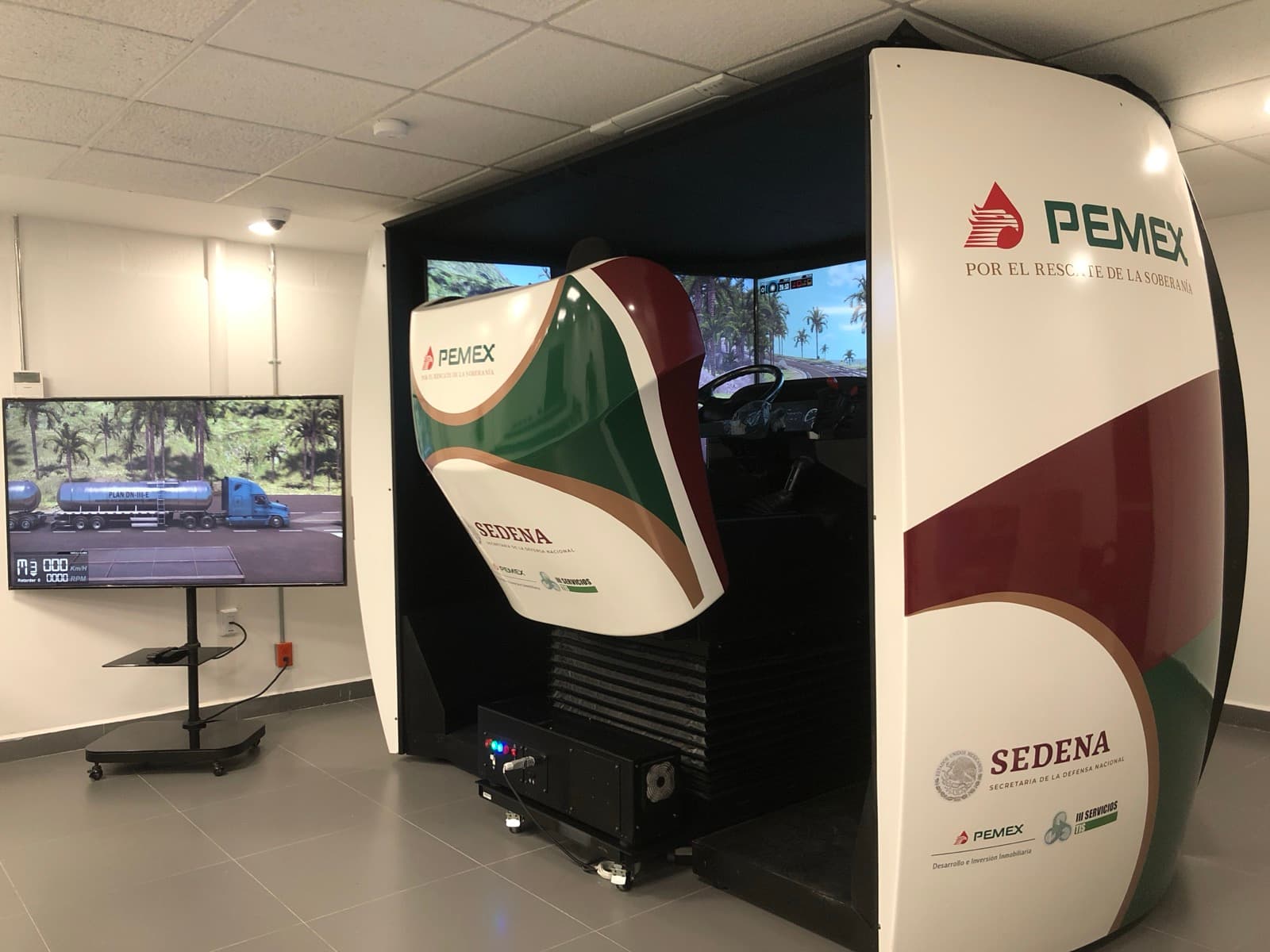
What sets us apart is that training starts from your own operation: we recreate the accidents that already happened in your fleet and the risk conditions your operators face — weather, traffic, cargo, fatigue, critical maneuvers — so they solve them in the simulator before they face them on the highway. That's why Coca-Cola FEMSA reports a 52% reduction in minor accidents in its annual report, and PEMEX went from 7 accidents per month to 1.6.

8,200 operators train 36 hours a year on APEX simulators, replaying the real accidents from their operation: 52% fewer minor accidents.
Read the full storyWith the most realistic motion system on the market: training transfers from the classroom to your real-world operation.


RPMs, braking, acceleration, driving habits, and safety errors for every operator, in real time. Everything is logged to the cloud and cannot be altered: comparison matrices by driver type, dashboards per site, and business intelligence boards for leadership.
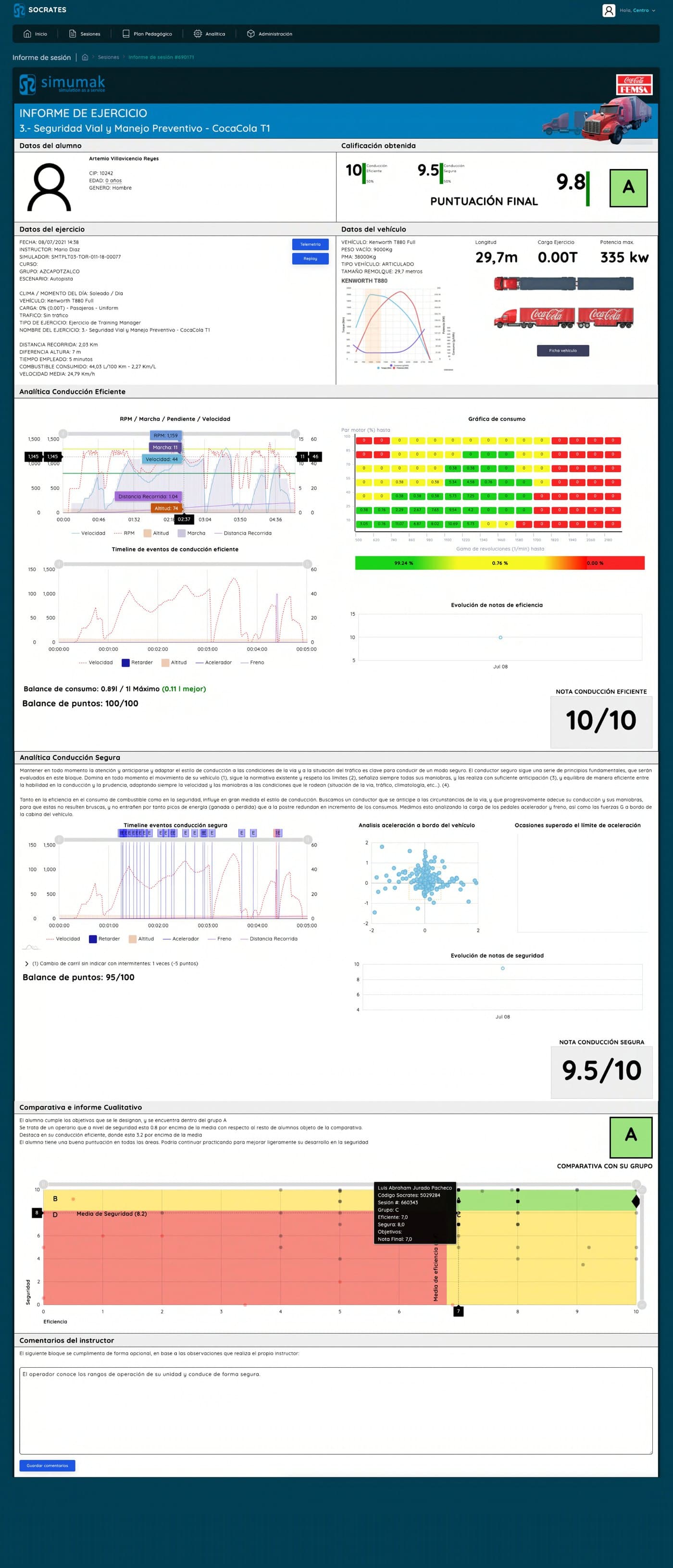
The simulator is only half the story: the software recreates the real accidents from your operation, measures every session, and delivers the results in the cloud.










































Mexico City, Guadalajara, Monterrey and the Bajío region: on-site service nationwide.
When the warranty ends, the annual service plan covers preventive and corrective maintenance and ALL simulator spare parts — travel expenses included.
Your after-sales hub: support tickets, service records and each unit's full history — in the cloud, in real time.
Broken levers, impacts, operator error: real rough use is covered. Your equipment never sits idle over a mishap.
We reply within 5 minutes.
The questions we hear most before a demo. Don't see yours? Write to us.
For the theory portion, yes: under 49 CFR Part 380 driving simulation devices are an accepted way to deliver knowledge instruction. For the behind-the-wheel portion, no — FMCSA does not allow BTW training to be conducted on a simulator, and that has to happen on a range or on the road. So for a US carrier the simulator is not a shortcut to a CDL. It is where the recurrent safety training happens for drivers who already hold one.
The accidents. A CDL says a driver passed a test once; it says nothing about how they handle a blown steer tire, black ice, or the specific intersection where your fleet keeps having incidents. APEX builds those situations from your own incident history and runs every driver through them, with telemetry per driver. Coca-Cola FEMSA reported a 52% drop in minor accidents and 72% in major ones within a year, with zero fatalities — on a fleet whose drivers were all already licensed.
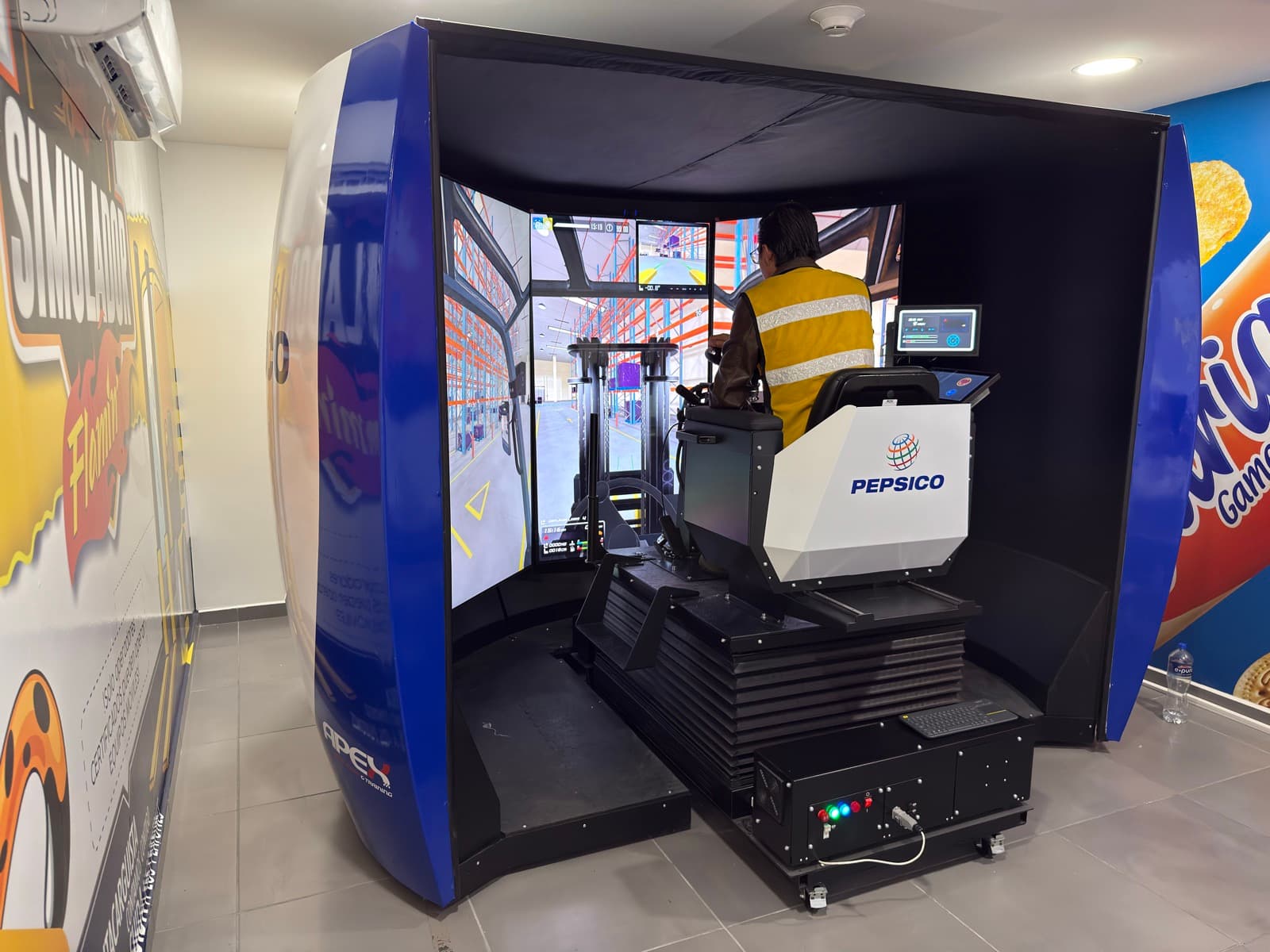
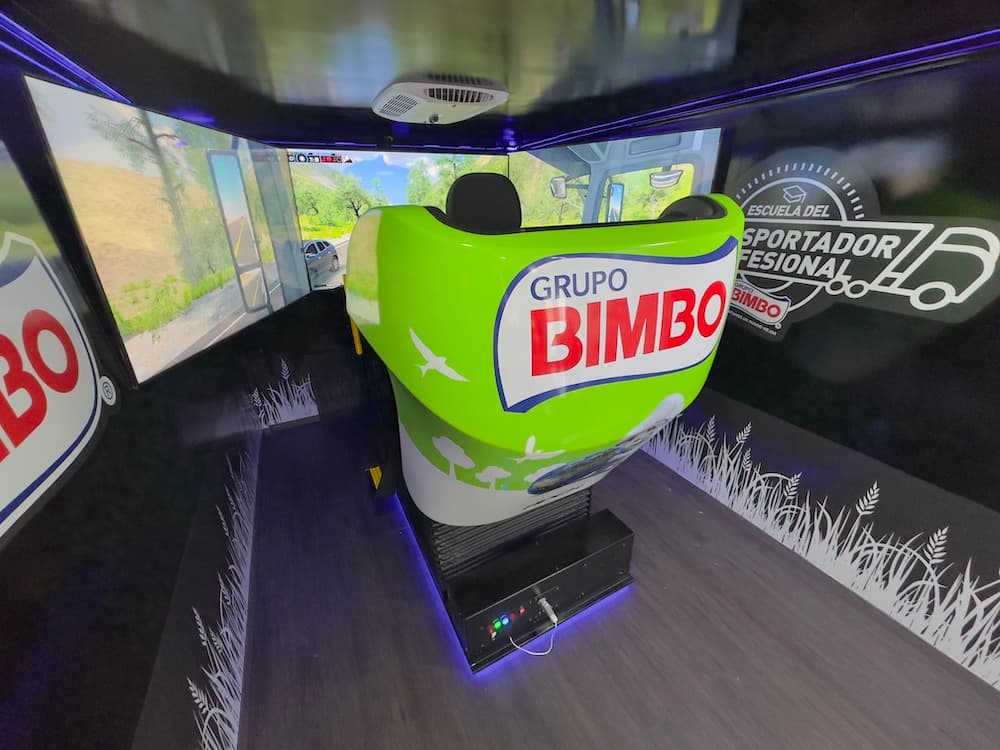
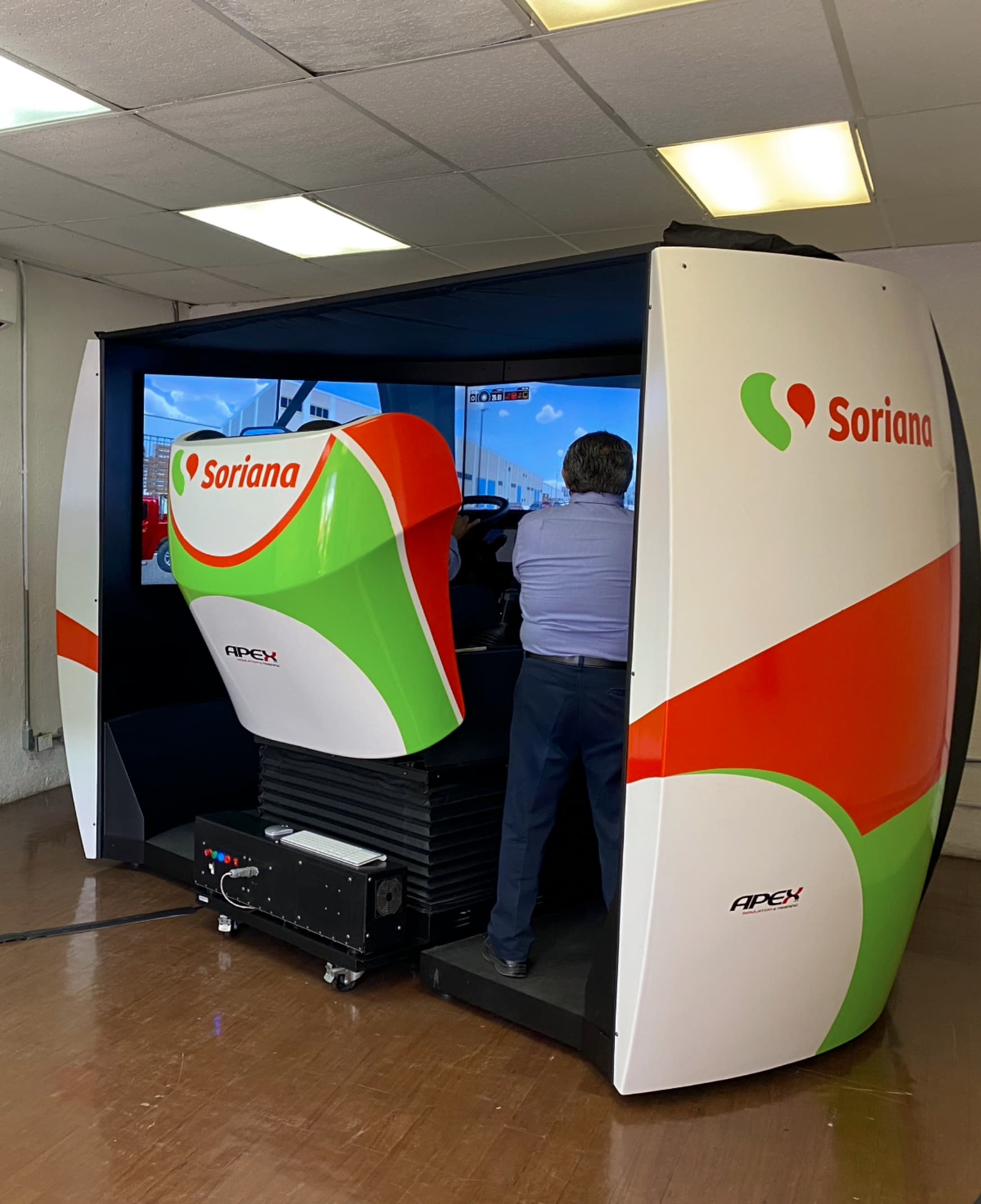
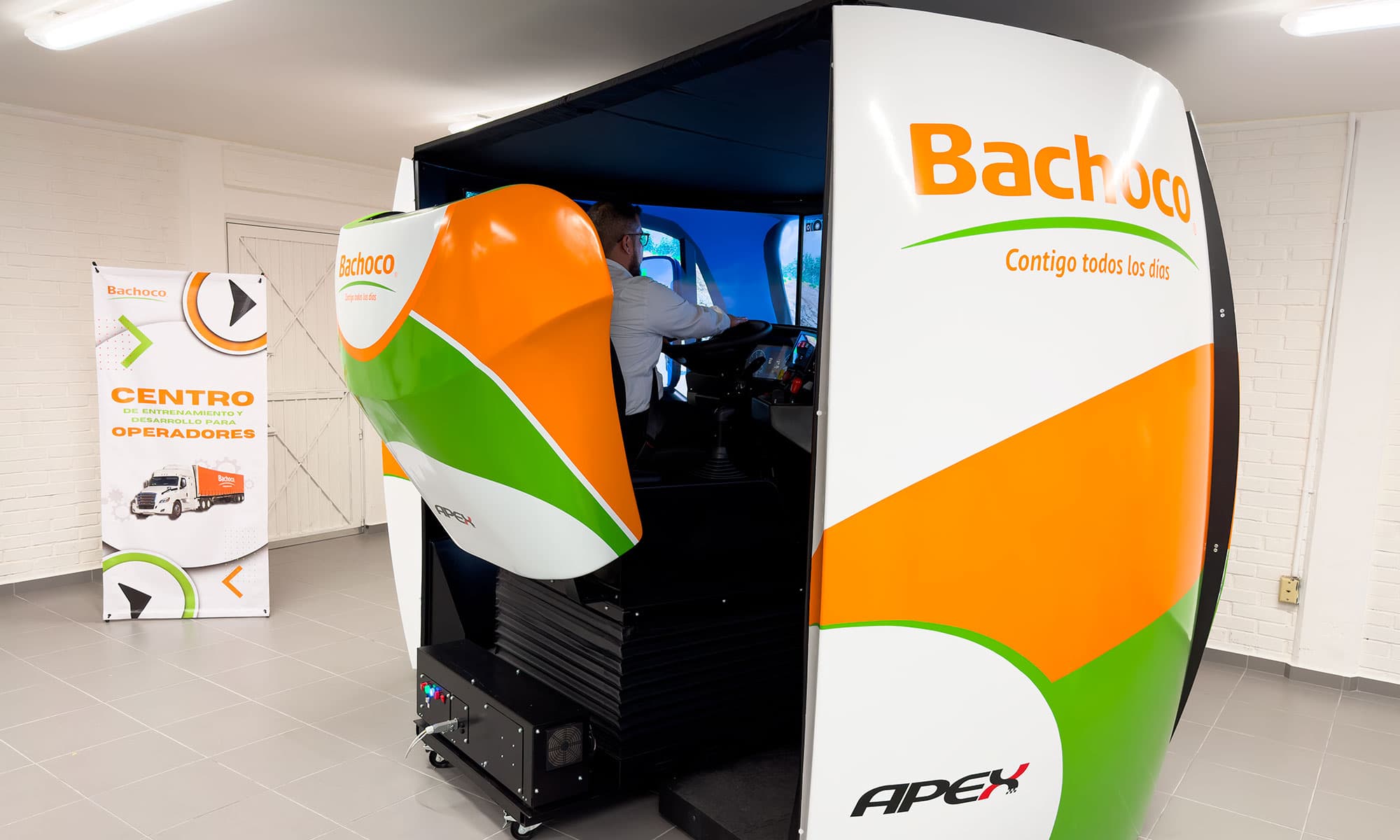
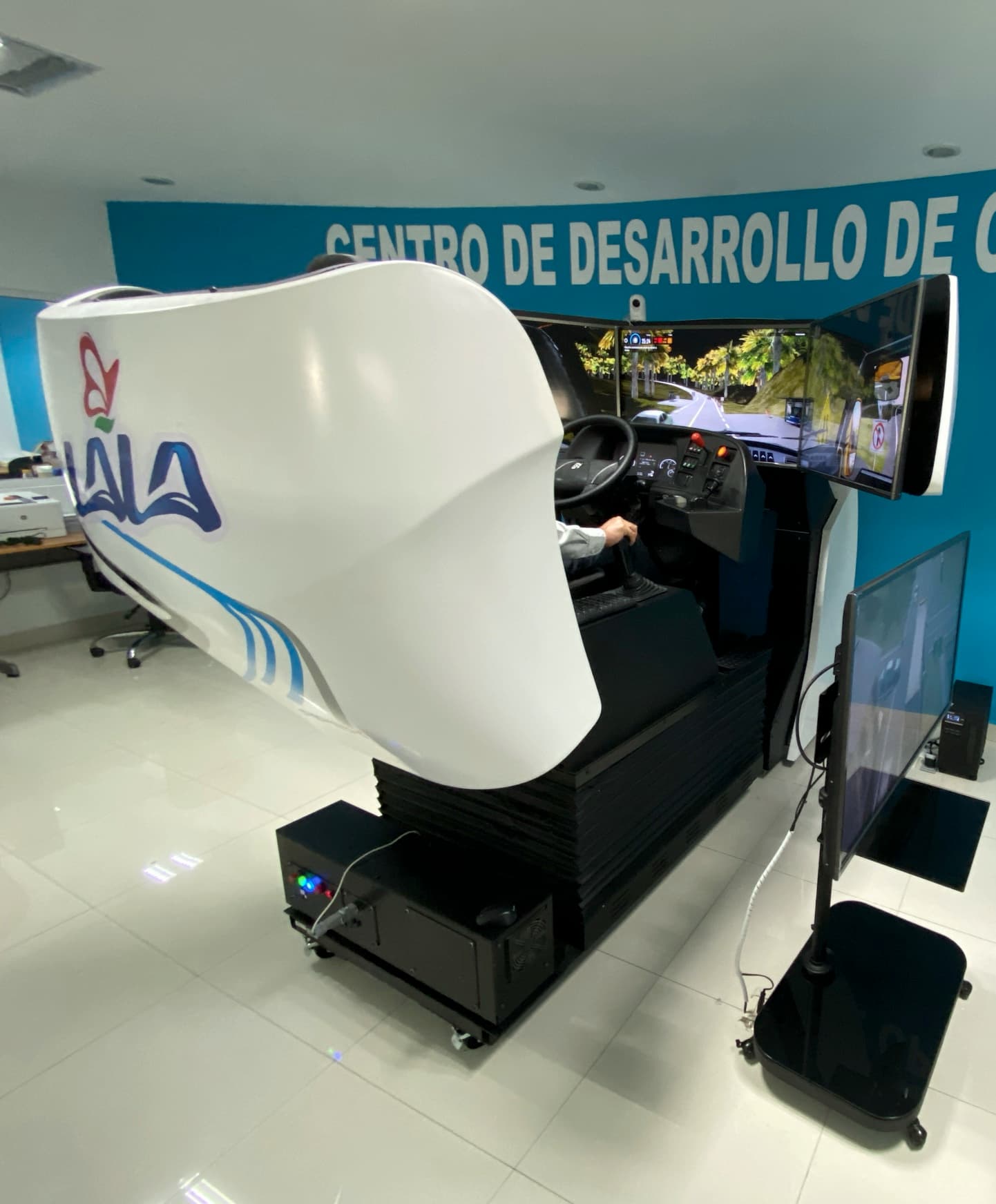
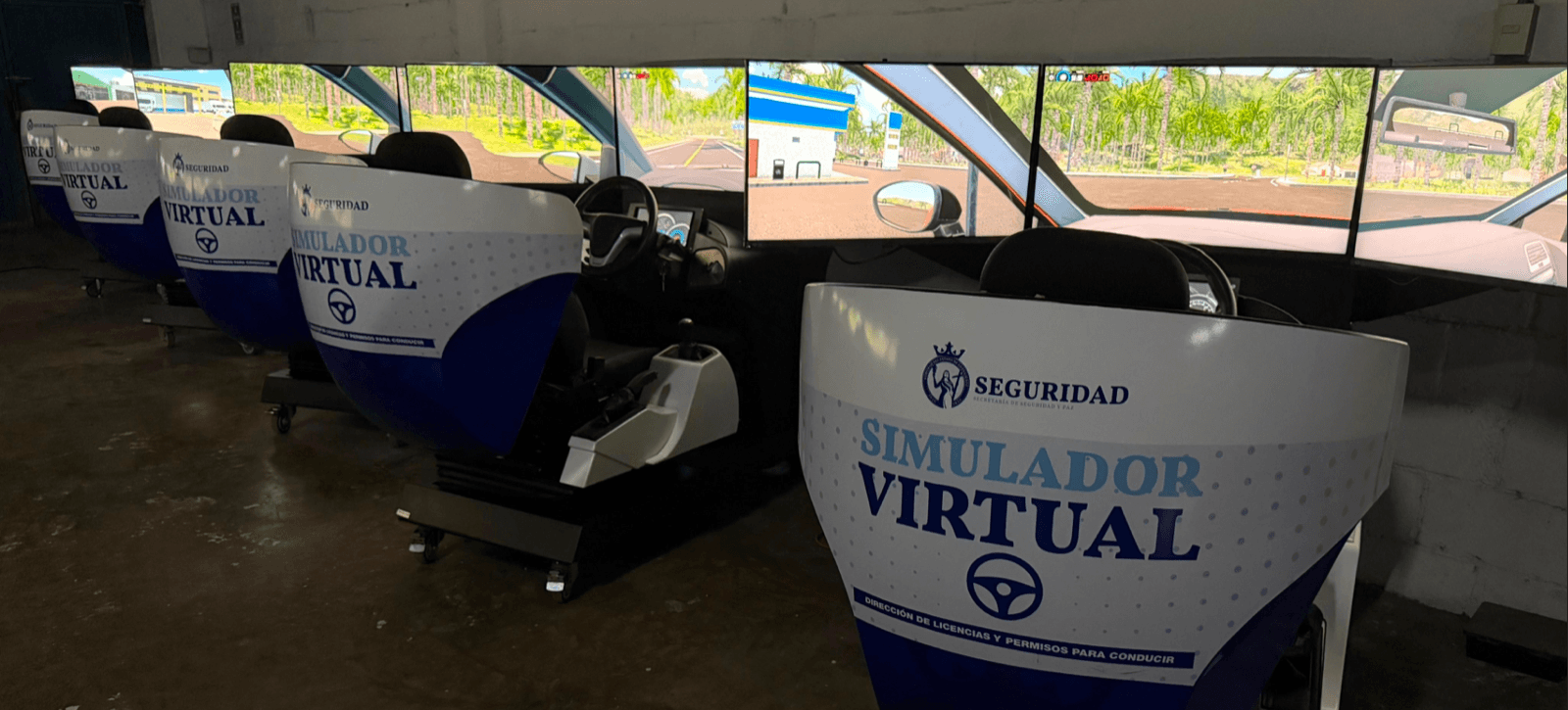
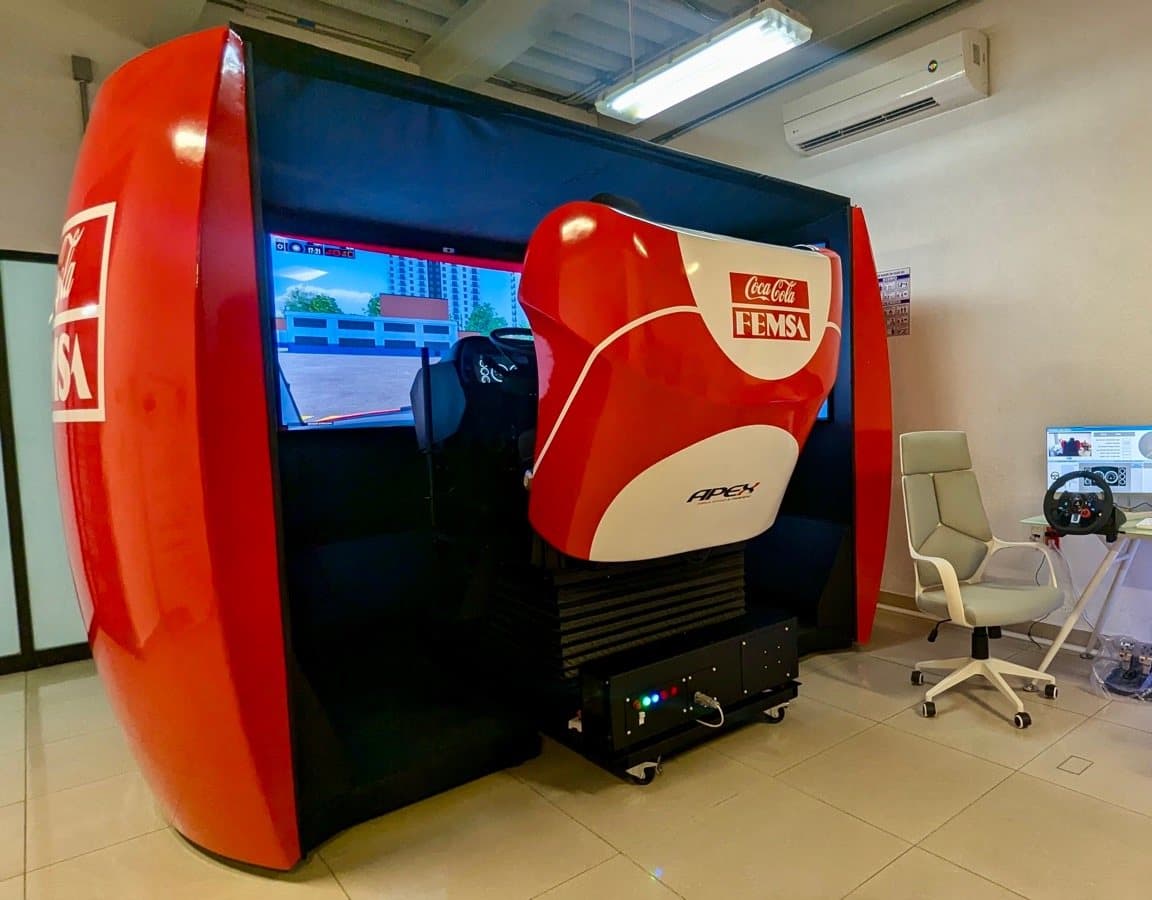
It's a professional training system — not a video game — built around a real tractor-trailer cab, fully enclosed and roofed (total immersion, unlike the open cabs on the market), with a real steering wheel, shifter, pedals, and dashboard, plus a wraparound projection system, the simulation software, and an instructor station. The operator drives through scenarios that reproduce real highway conditions, and every maneuver is measured: braking, acceleration, RPMs, fuel use, and safety errors. It's used to train new operators, recertify current ones, and rehearse high-risk maneuvers without exposing vehicles, cargo, or people.
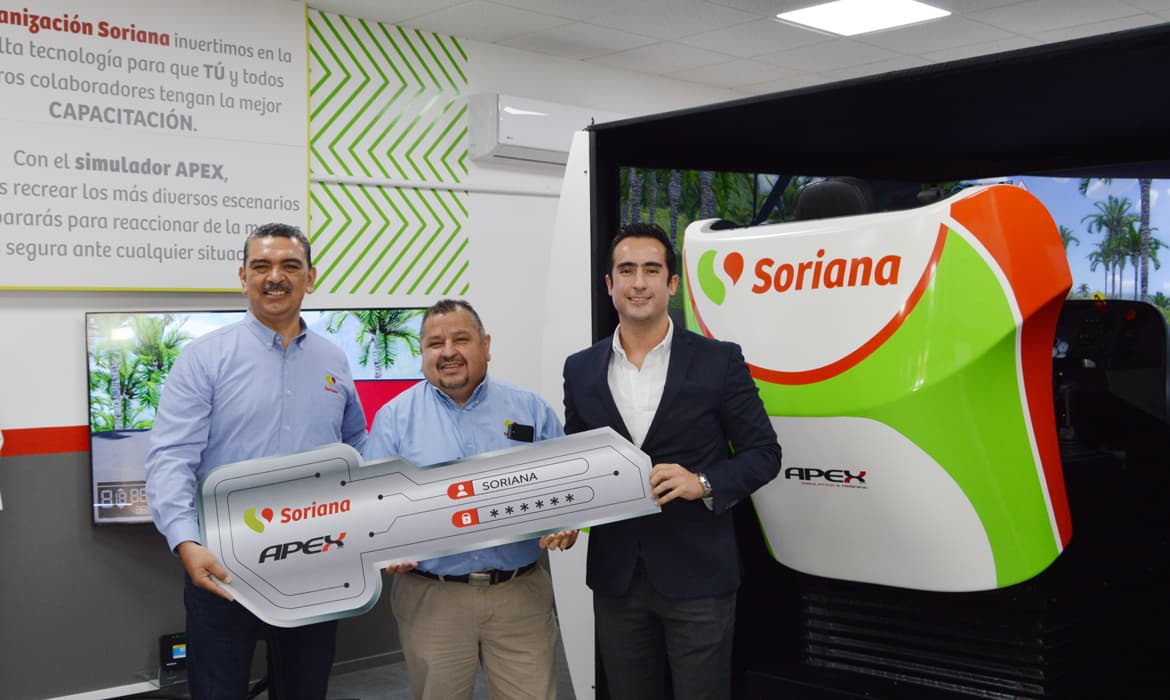
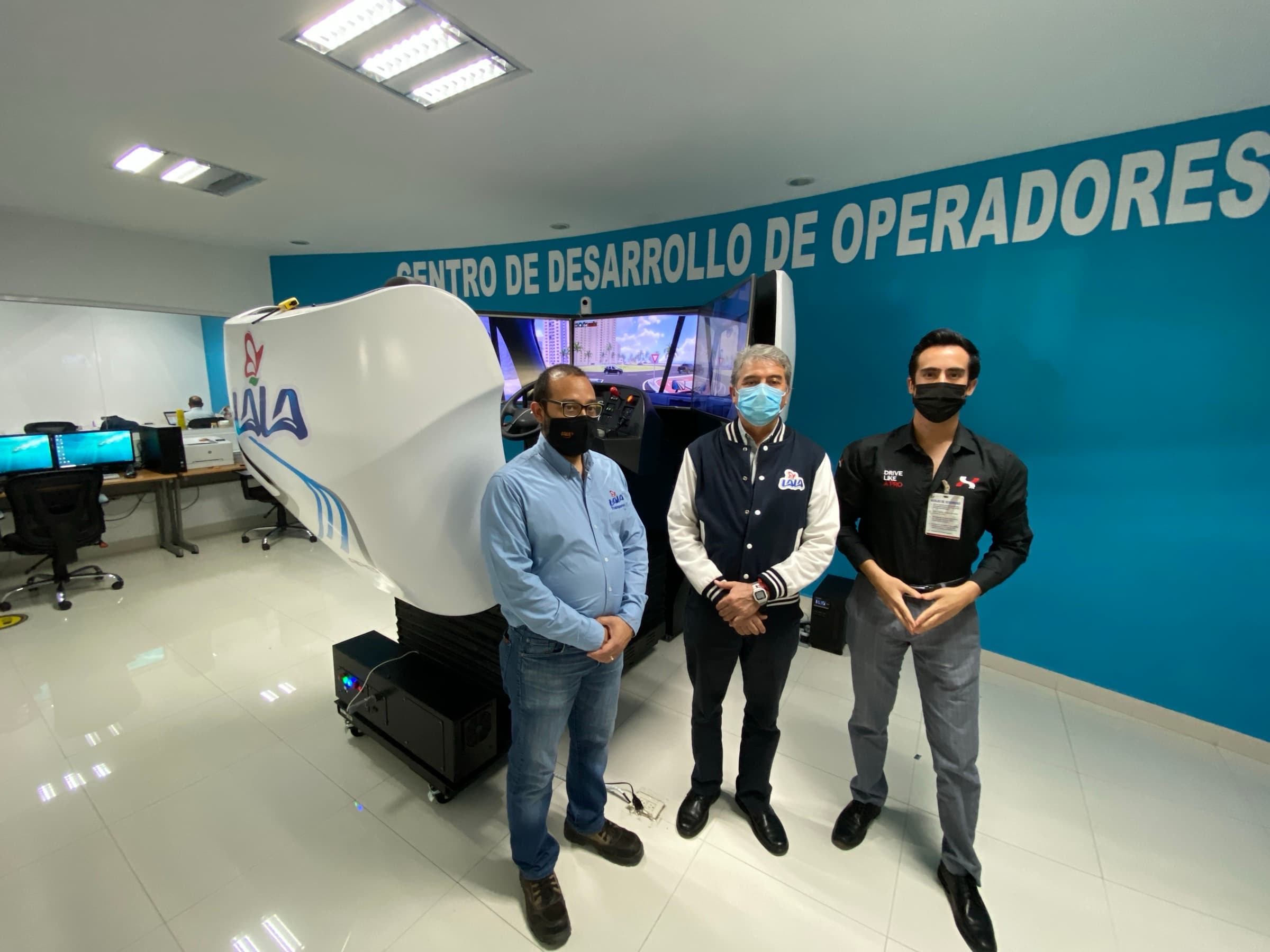
APEX simulators operate in private fleets, public transit systems, government agencies, and law enforcement across the country. In transportation and logistics: Coca-Cola FEMSA, PepsiCo, Grupo Bimbo, Barcel, Bachoco, Arca Continental, Grupo Modelo, Danone, Alpura, Grupo Lala, Bepensa, Estafeta, Coppel, Liverpool, Soriana, OXXO, and PEMEX, along with federal motor carriers Tres Guerras, Fletes México, HG Transportaciones, and TUM. In public transit: Mexico City's RTP passenger bus network — which acquired the country's first electric bus simulator — and state training programs in Jalisco, Sonora, San Luis Potosí, and Campeche. In driver's license testing: the Government of the State of Guanajuato — the largest program in the country, with more than 300,000 exams administered —, the state Ministry of Mobility of Jalisco, Nayarit, and San Pedro Garza García. In public safety and defense: Jalisco's Ministry of Public Security, the Nuevo León Attorney General's Office, and the municipalities of Puebla, Querétaro, Guadalajara, Escobedo, and San Pedro Garza García.
The range we see in Mexican fleets goes from a 15% to a 50% reduction in accident rate, depending on how many hours each operator trains per year and how closely the scenarios match their real operation. The best-documented case is Coca-Cola FEMSA, which reports in its public annual report a 52% reduction in minor accidents, a 72% reduction in major accidents, and zero fatalities after implementing simulation with APEX. PEMEX went from seven accidents per month to 1.6.
Yes — and it's our main differentiator. We start from your real accident history: we analyze the crashes that already happened in your fleet and build the exercise that reproduces them — same type of vehicle, same maneuver, same weather, traffic, and cargo conditions — along with the risk scenarios your operators face every day. The operator faces that accident again with zero risk, as many times as it takes, and understands exactly at which moment the wrong decision was made. It's the difference between training on generic exercises and training on your own reality.
On the hardware side, three things other simulators don't offer: the cab is total-immersion — fully enclosed and roofed, while the rest of the market uses open cabs —; the motion system moves the entire cab, not just the seat, which is far more realistic for cargo hauling because road banking, braking, and cargo behavior are felt through the whole body; and the control station lets the instructor drive another networked vehicle inside the same session, something the others can't do. On the software side: fingerprint identification and a cloud system with tamper-proof results — the others don't have it. And on top of all that, the largest after-sales support operation in Mexico.
Every session generates full telemetry per operator — RPMs, braking, acceleration, driving habits, and safety errors — and here's one of our differentiators: everything is logged to the cloud and cannot be altered, with no way to edit results for convenience. From there you get the comparison matrix by driver type — A, B, C, and D classification, safe-and-efficient profiling, and a risk traffic light —, per-site dashboards accessible from any device, and a business intelligence board for leadership, with API connectivity to feed the results into your company's systems. Access is validated with biometric fingerprint sign-in, so every training hour is attributed to the right person: that eliminates logging hours that never happened.
It depends on the profile and the risk level of the operation. In the fleets we serve, the range goes from 16 to 80 hours per year per operator: Coca-Cola FEMSA trains 36 hours, PEMEX 40, and Soriana reaches 80 in its internal training program. For new hires, the program is usually more intensive at the start and then shifts to periodic recertification. In the proposal we help you size how many operators one simulator can absorb given your shifts.
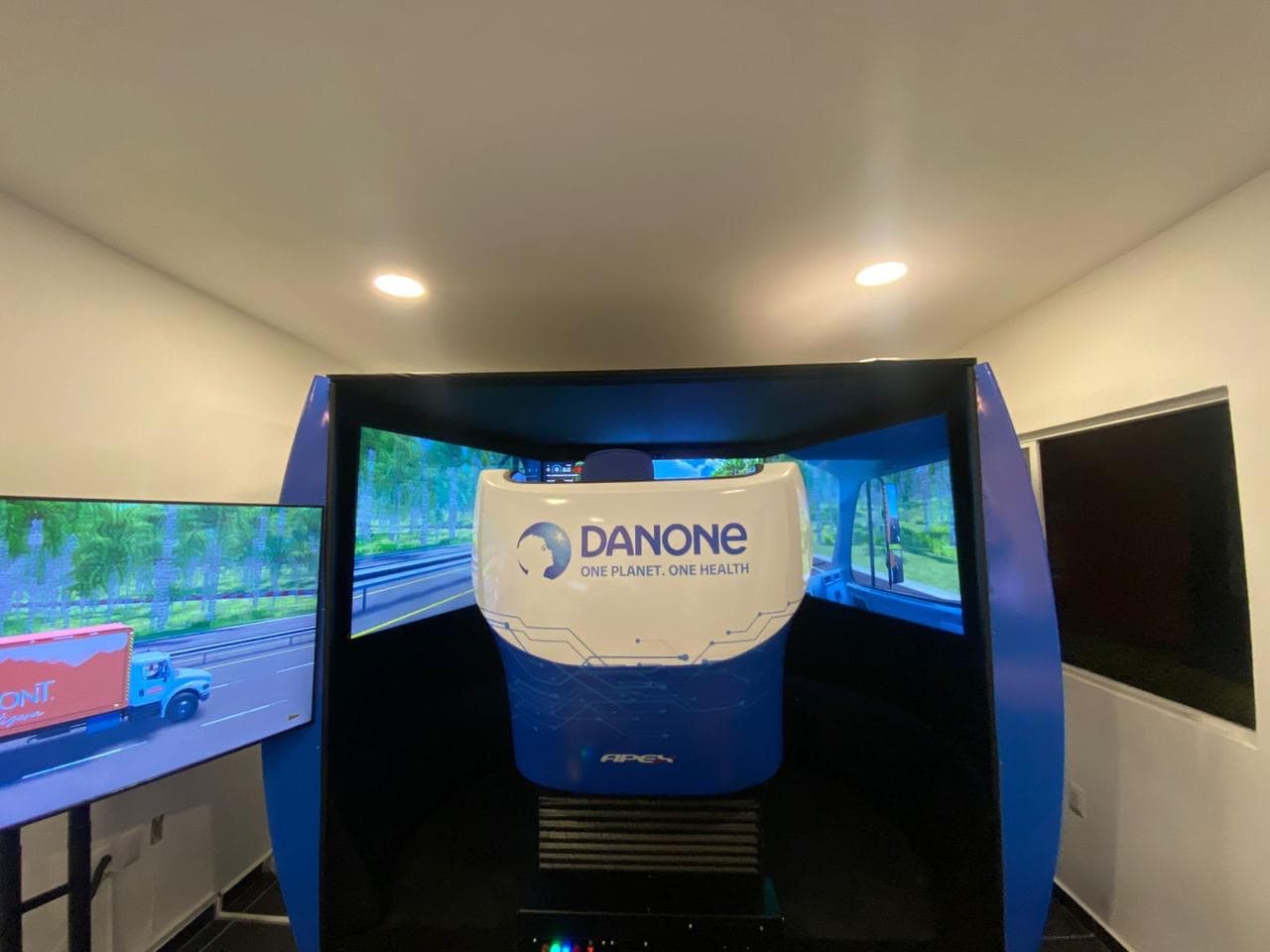
Yes. The cab is 100% wrappable with your brand design, and the software is configured with the trucks you actually operate, so the operator trains in the same truck they drive on route and recognizes the equipment as their own — it builds identity and a sense of belonging. Beyond internal buy-in, the simulator becomes a visible asset at trade shows, job fairs, and driver-recruitment campaigns.
Here's one of the reasons fleets choose us: the most advanced after-sales support system in the Mexican market. We have our own technicians in Mexico City, Guadalajara, Monterrey, and the Bajío region, staffed to serve the largest customer base in the country, and service is managed in APEX Drive+, our platform where every unit carries its service and ticket history. Equipment ships with a warranty and is maintained under an annual service plan covering preventive and corrective maintenance, remote and on-site support, software updates, and every spare part in the simulator — with technician travel and expenses included, and coverage even against equipment misuse. We are manufacturers with our own operation in Mexico: service never depends on an overseas vendor.
Most simulator vendors sell the equipment with limited coverage: spare parts are quoted separately, technician travel and expenses are billed on top, damage from misuse isn't covered, and service depends on a distributor or an overseas manufacturer. The APEX service plan includes every spare part in the simulator, technician travel and expenses, and coverage even against equipment misuse. Everything is tracked in APEX Drive+ — our app for support tickets, service visits, and per-unit history — and service is delivered by our own technicians in Mexico City, Guadalajara, Monterrey, and the Bajío region. That's why Mexico's largest fleets renew their service plan year after year.
The software is configured with the makes and models in your fleet: Kenworth, International, Freightliner, Scania, Hino, Isuzu, DAF, BYD, Mercedes-Benz, Volvo, Yutong, and more, with an 18-speed manual or automatic transmission. A single cab switches between more than 100 configurations — tractor-trailer, tanker, straight truck, single-axle truck, or double trailer — so you train the whole fleet without buying one unit per vehicle type.
Delivery is turnkey: APEX installs the equipment, calibrates it, and trains your instructors — it's up and running from day one, with no integrators or third parties. It includes the equipment warranty and access to APEX Drive+, the app where support tickets are filed and service history is kept. Once the warranty ends, the annual maintenance plan covers preventive and corrective service and every spare part, with technician travel and expenses included.
Yes. The technical-economical driving module analyzes fuel consumption by driving habit — RPMs, engine use, engine braking, braking, and acceleration — and trains eco-driving techniques. In Mexican fleets, typical fuel savings run from 1.5% to 5%, and smoother driving also cuts the maintenance cost of the real units by 15% to 30%.